
Wire Fraud Is the Fastest-Growing Real Estate Crime
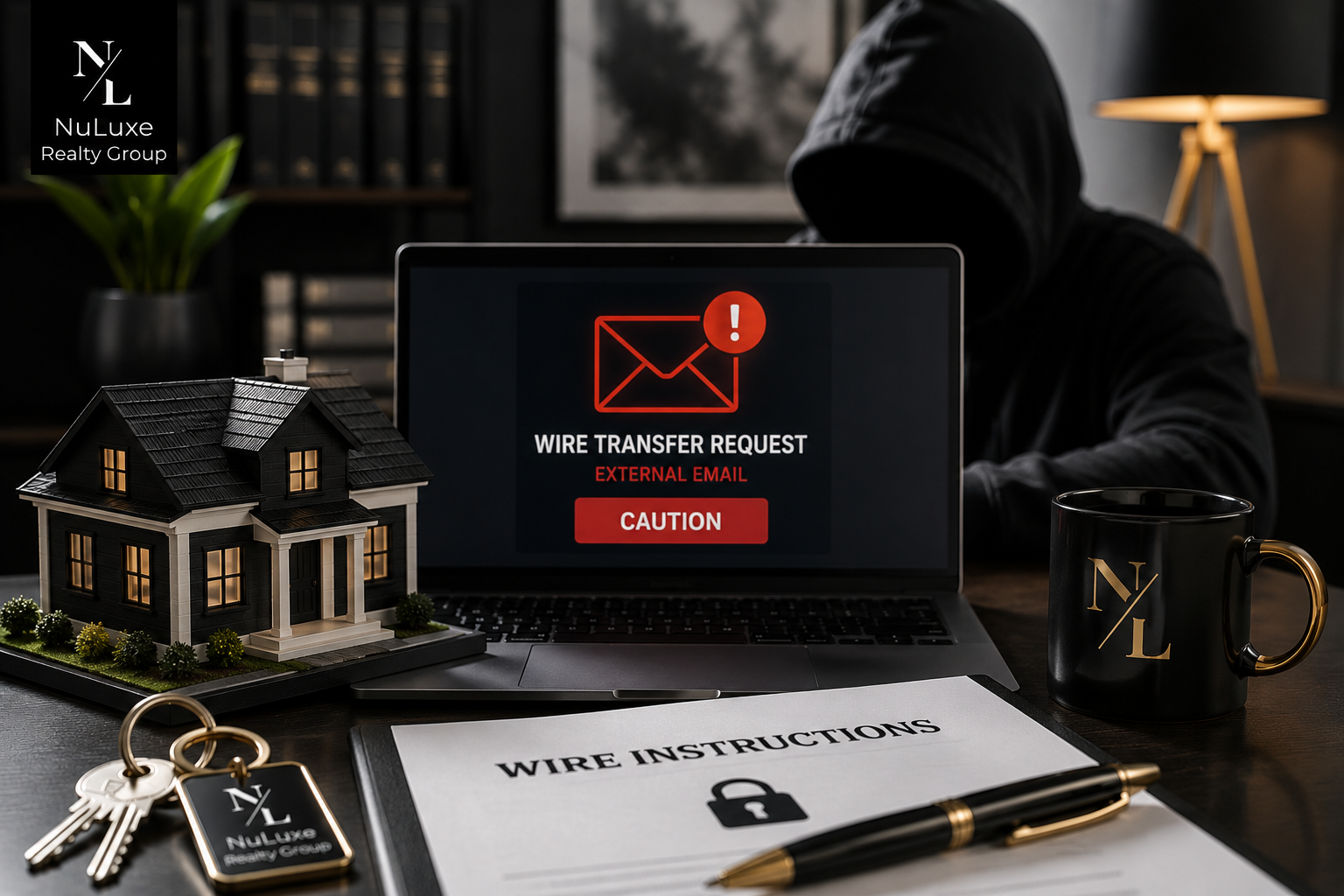
The Most Dangerous Part of Closing Happens Online
Most buyers worry about inspections, financing, or appraisals.
Very few worry about cybercrime.
But wire fraud has become one of the fastest-growing threats in real estate transactions.
And the most alarming part is how simple the scam often looks.
How Real Estate Wire Fraud Happens
The typical fraud scenario is surprisingly convincing.
A hacker gains access to:
an agent’s email,
a lender’s email,
or a title company communication chain.
Then, shortly before closing, the buyer receives “updated” wire instructions by email.
The message often appears legitimate.
The branding looks correct.
The timing feels normal.
The buyer sends the funds.
Hours later, the money is gone.
Why Recovery Is Extremely Difficult
Wire transfers move quickly.
Once funds are transferred into fraudulent accounts, they can be dispersed almost immediately across multiple banks or overseas institutions.
Unlike some forms of consumer fraud:
there is often no automatic reimbursement,
no federal insurance protection,
and no guaranteed recovery process.
In many cases, the funds are permanently lost.
Why Buyers Are Especially Vulnerable
Closing day creates urgency.
Buyers are already:
stressed,
overwhelmed,
coordinating deadlines,
and moving large amounts of money for the first time.
Fraudsters exploit that pressure.
A buyer rushing to “complete closing” may follow instructions without stopping to independently verify them.
The Safest Way to Verify Wire Instructions
One simple rule dramatically reduces risk:
Never trust wiring instructions sent solely by email.
Before sending any funds:
call the title company directly,
use a phone number independently verified from the company’s official website,
and verbally confirm every wire detail.
Do not use the phone number provided inside the suspicious email itself.
That defeats the purpose of verification.
A Few Extra Minutes Can Prevent Catastrophic Loss
Real estate transactions involve life-changing amounts of money.
Treat wire verification with the same seriousness as signing the closing documents themselves.
The safest buyers are not paranoid.
They are disciplined.
In modern real estate, cybersecurity is now part of due diligence.
